I hear you singin’ in the wire, I can hear you through the whine
Bob Dylan supposedly called Wichita Lineman the greatest song ever written. Songwriter Jimmy Webb, at just 21 years old, saw a guy working a tough and lonely job atop a telephone pole and turned that image into one of the most hauntingly beautiful descriptions ever of having to go to fuckin’ work when you just want to be home with somebody. His words on how he came up with it, from the Dallas Observer:
“And as I sat down to write, this poignant image came through my mind. I had just been back to visit my family, and I had been up in the flat country along the panhandle in Oklahoma, drivin’ along, and I had seen these telephone poles along the road. It was kind of a surreal vista and hypnotic, and if you’re not careful, you can, like my dad says, go to sleep and run off in the bar ditch. I was drivin’ along there, just blinkin’ and tryin’ to stay awake, and all of a sudden there was somebody on top of one of those telephone poles—out of thousands of telephone poles, there’s one that has a guy on it, and he had one of those little telephones hooked into the wires. I could see him on top of this pole talkin’ or listenin’ or doin’ somethin’ with this telephone. For some reason, the starkness of the image stayed with me like photography. I had never forgotten it.”
Webb imagined the guy talking to his sweetheart, and drew on his feelings for the same woman he’d already written a string of hits about—”Up, Up And Away,” “MacArthur Park,” “By The Time I Get To Phoenix,” “The Worst That Could Happen.” That woman ended up marrying another man, and the heartbreak kicked Webb’s ass so hard he came up with the couplet that still floors people to this day, describing the enormity of desire he knew he’d have for her for the rest of his life: “And I need you more than want you/And I want you for all time.” As Webb told Dylan Jones at Literary Hub,
I was trying to express the inexpressible, the yearning that goes beyond yearning, that goes into another dimension, when I wrote that line. It was a moment where the language failed me really; there was no way for me to pour this out, except to go into an abstract realm, and that was the line that popped out.
Here, from the BBC in 1971, is Webb performing the song himself on Piano:
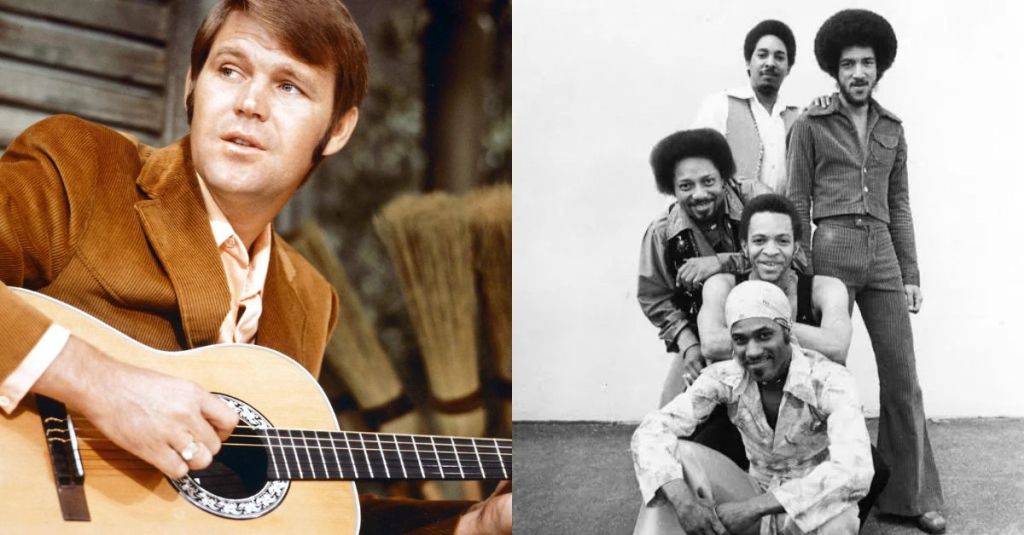
And here’s the first recording, made famous by the Rhinestone Cowboy himself, Glen Campbell, after Glen called Webb up to write another “place-based” song like “By The Time I Get To Phoenix” for him:
Mix Webb’s songwriting with the talents of the “Wrecking Crew,” the gang of session musicians (including Campbell) who played on just about every 60s-early 70s hit you can think of, and you get this incredible recording. Carol Kaye’s reverb-drenched Danelectro bass walks you into this soaring depiction of strained longing. Webb calls the song “unfinished”—that’s why you have Kaye’s bass solo in lieu of a third verse—but I don’t think anything else needs to be said. Just…60s AOR perfection.
Now let’s run it through the unlikely filter of New Orleans funk, courtesy of The Meters and produced by the legend Allen Toussaint, up at the top of the blog.
In 1970, The Meters put out their third album, “Struttin’.” They’d already had instrumental hits like “Cissy Strut” and “Look-Ka Py Py,” but “Struttin’” saw Art Neville, the group’s organ player, taking full lead vocals on a few songs, including Webb and Campbell’s hit from two years earlier. It’s just such a cool spin on the original. Neville’s performance brings all the world-weariness and longing of Webb’s words. I love the way the band picks things up in the chorus. And don’t those haunting, repetitive guitar notes from Leo Nocentelli feel like morse code, or a telephone busy signal?


Leave a Reply